
WORTH ASKING
Share a few details and our team will be in touch within 1–2 business days.
Welcome to Return on Design™, the podcast where beauty meets strategy and interiors become assets that perform. I’m your host, Rachel Niederhofer, designer, investor and builder of high impact spaces that deliver real results. Alongside my husband, I run both a design firm and a real estate investment company, where I live at the intersection of creativity and ROI every day. Each week, I’ll be unpacking what most people overlook: how strategic design decisions can grow your investment, elevate your lifestyle and unlock the full potential of your property.
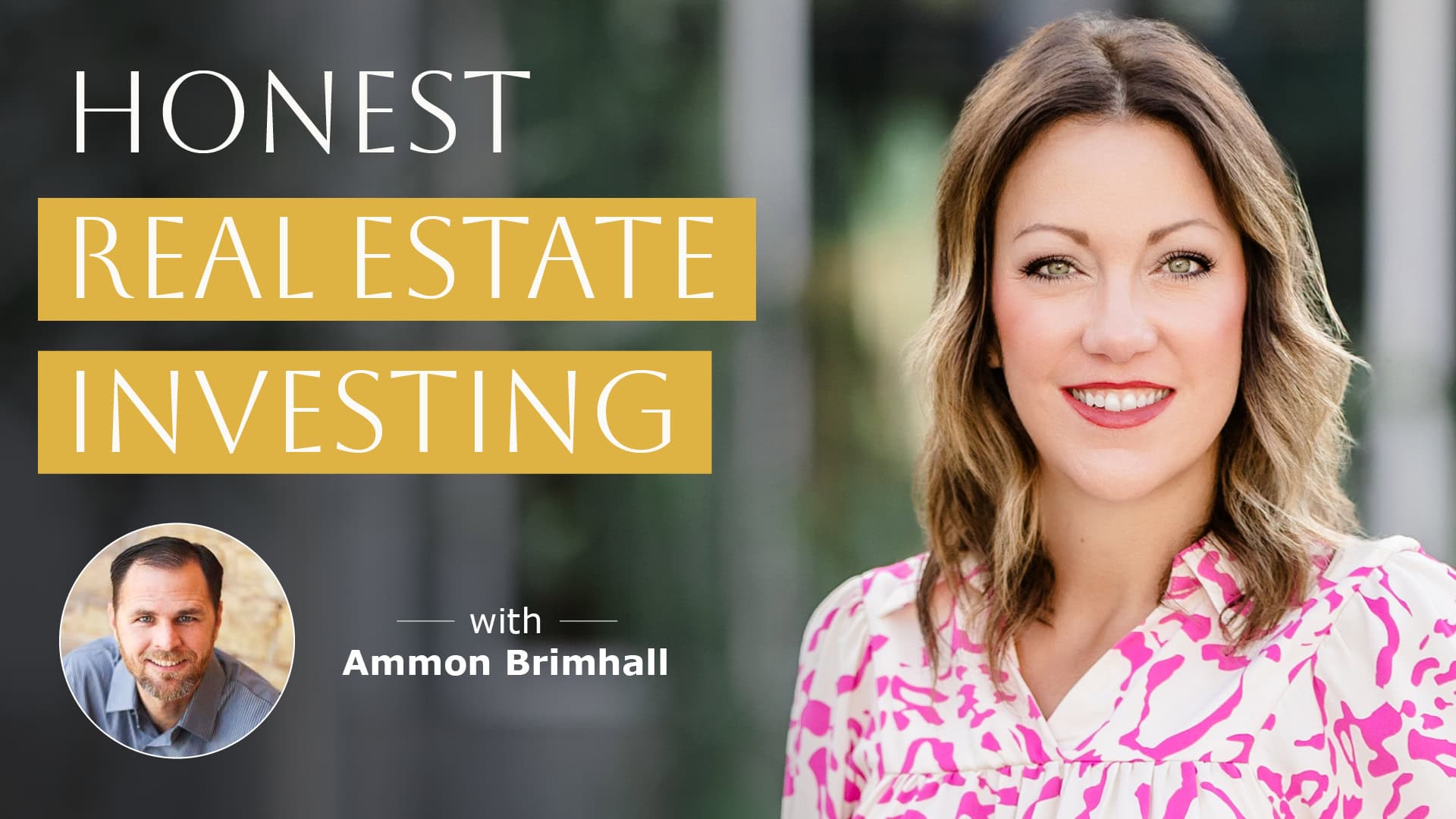
Honest real estate investing sounds like it should be the default. In practice, much of the industry runs on hype: stadium events, high-pressure sales tactics and education packages that cost tens of thousands of dollars. Ammon Brimhall has spent over 25 years flipping, wholesaling, renting and teaching, and he has built his approach on the opposite idea.
In this episode Rachel talks with Ammon about how he got started, why trust works better than manipulation with sellers and agents, how he reads the market without pretending to predict it, and how a new investor can find education worth paying for.
In his early 20s, Ammon was framing houses on a construction site when he went to a large stadium event with a lineup of speakers selling stock trading and real estate investing. He signed up for the real estate track, which he couldn’t really afford, and moved through the familiar progression: an inexpensive three-day class, then the bigger package. The education wasn’t good. He worked hard for a year before he closed his first deal.
That deal made $60,000, split evenly with a partner. His $30,000 was just enough to pay his debts. From there he went on to flip, wholesale, rent and eventually teach. What drew him in wasn’t the construction work, he says, but finance: how money works and what wise decisions can do. Rich Dad Poor Dad gave him the map, even if it didn’t teach the individual bricks.
Ammon describes two ways to be powerful in sales. One studies human psychology to get people emotional and then leads them where you want them to go. It works, and people get wealthy from it, but he doesn’t think it’s good for people. The other still influences people, but by building trust: understanding them and presenting legitimate solutions to legitimate problems. You engage their mind, and the emotion that follows is honest trust instead of manufactured excitement.
He named his company Broccoli Real Estate around that idea of honest real estate investing. Broccoli is honest calories: no sugar, no hype, nothing hidden. That’s what he thinks education and investing should feel like. It’s also why he says there are no secret leads. Investors work the same leads they always have. What wins the deal is the tone of voice and the way you engage, so the seller trusts you enough to hear your offer, combined with creativity in solving their problem.
Ammon isn’t a licensed agent, but he works with listing agents and wholesalers constantly. Within seconds of a conversation he can tell whether an agent is resistant or hostile to investors, and he adjusts. With a hostile agent he doesn’t bring up wholesaling at all. He calls the listing agent directly, asks about the house and listens to how they talk about it.
Then he does something most investors don’t: he offers to send a spreadsheet showing what he would make or lose at the listed price. Agents often assume a simple equation. Buy at $450,000, put in $50,000 and sell at $550,000, and they figure the investor made $50,000. Once closing costs, financing and resale costs are counted, that investor may not even break even. The agents aren’t careless. They just don’t invest, so they don’t run the numbers the way investors do.
With the spreadsheet in hand, Ammon compliments the agent for working hard for their client and asks a single question: is there anything he could do for the agent or the client that would justify a lower price? If the answer is no, he thanks them and checks back in a few weeks. It has been years since an agent was rude to him. The same deal math matters when you evaluate a real estate deal of your own.
There is a stigma around investors, Ammon admits, and investors earned much of it. The fix, in his view, is more honest real estate investing. Many were trained by salespeople to use the same high-pressure tactics, and agents are tired of them. He rarely uses the word investor. He tells agents he buys and sells houses.
There’s also a structural reason. Agents come and go quickly, so many are fairly new, and when something is confusing, people distrust it. That isn’t ignorance. It’s a sensible instinct. A newer agent who hasn’t studied deeds of trust, promissory notes or equitable interest will hear subject-to or seller carry and get suspicious. So Ammon comes with more questions and explanations than pitches. He learns where the agent’s mind is first, and he presents a creative option only when it actually helps their client.
if they’re not a qualified lead, don’t sell the product.
Return on Design™, Episode 25
If seller financing would be bad for the seller, presenting it means acting in bad faith. That’s why an investor needs a range of solutions, not one strategy to push. He recommends the book SPIN Selling for learning to ask questions that uncover what the other side really needs.
On the market, Ammon’s first rule is blunt: anyone who claims to know what’s going to happen is lying. The economy runs on supply and demand plus inflation. Affordability today is low, as it was in 2008, but the mechanisms behind it are different. In 2008 he watched people speculate on pre-construction homes with adjustable-rate loans they couldn’t afford. When the crash came, vacant inventory was everywhere. After it, he wishes he’d had the confidence to buy more homes.
Today he sees less speculation and higher costs. Hiring a contractor now runs around $150 an hour, and materials are expensive, which makes it hard for prices to fall below the cost to build. His guess, and he’s clear it’s a guess, is that some markets fall while most hold or grow. His advice for right now: be careful with rentals unless you have plenty of cash, and don’t jump to something like a 50-unit apartment building before you’re ready.
Take action, but keep listening.
Return on Design™, Episode 25
Listen to the optimists and the doomsayers, skip the political commentary, and don’t take on more risk than you can handle. Success in real estate investing takes decades of good deals, not one.
There are countless investor educators because the incentive is enormous: sell a $10,000 or $20,000 package without guaranteeing anyone’s success. Ammon estimates that if a program asks for $10,000 to $40,000 up front, the odds of succeeding with it may be two or three out of 100. Flipping a house is hard, emotional and full of risk, and most people aren’t told that at the start.
His advice for new investors:
Ammon runs a free deal review every Tuesday at broccolire.com. Rachel’s takeaway matches the reason for this episode: Return on Design™ puts people in front of listeners who have the experience and the ethics to be worth hearing. If you’re investing in Dallas and North DFW, see how we approach interior design for investment properties.
My philosophy, if I were to write a book about sales, is that there are two ways to be really powerful and make a lot of money in sales. The one is to study, is what I would call a healthy way, a moral way, and the other call it immoral one, right? Now, whether you’re a religious or not, I think you can still use those terms, right? And the immoral way is you study human psychology so that you know how to get people very, very, very emotional. And once they’re emotional, you then lead them to what you want them to do. It works. It’s incredibly powerful, it’s effective. And if you study a lot of the big salespeople, a lot of the big stages, you see that there’s a lot of that. And it works. You can get very wealthy on it. And so I’m not going to say it doesn’t work. But I don’t think it’s good for people. I don’t think it’s good for individuals. And I don’t think it’s quite frankly good for country to have businesses that are now what I, I think they’re taking advantage of people’s legal, but I don’t like it.
Welcome to Return on Design™, the podcast where beauty meets strategy and interiors become assets that perform. I’m your host, Rachel Niederhofer, designer, investor, and builder of high impact spaces that deliver real results. Alongside my husband, I run both a design firm and a real estate investment company where I live at the intersection of creativity and ROI every day. Each week, I’ll be unpacking what most people overlook, how strategic design decisions can grow your investment, elevate your lifestyle and unlock the full potential of your property. You’ll get real tools, proven strategies, and unfiltered conversations with industry experts who are doing it right. So if you’re ready to invest with purpose and leverage design as a powerful tool, this podcast is for you. Welcome back to Return on Design™. I am your host, Rachel Niederhofer, and today I have a special guest, Ammon Brimhall. He is a real estate investor, a real estate educator and an entrepreneur. So I’m so glad to have you, Ammon. Welcome to the show.
Well, thank you, Rachel. Thanks for having me. It’s always fun to talk with you.
So tell our listeners, Ammon, a little bit about yourself. How did you end up in the world of real estate as an investor?
Yeah, it’s a fun story. I’ve spent my whole life really as an investor and as an investment educator, but years and years and years ago, now, I didn’t seem like that long ago, but it has been. In my early 20s, I went to an event, a large event like many people may have gone to, a big stadium with a lot of speakers. I was framing on a construction site, so I was building houses and I went to this big event and they presented stock trading and they presented. I don’t think Amazon was around at the time, so there wasn’t like a, you know, build an Amazon store guy, but there was stock trading. There’s real estate investing. There was, I’m sure, some other elements there. And I thought the real estate investing looked really, really, really interesting. And so I signed up for that and I certainly didn’t have the money to sign up for that, but I did. Well, at the big event, you know, they always get you to go to a three-day that’s fairly, you know, inexpensive and then there they have the bigger package. So I came through that, that progression, which is very common in the investment space and signed up with a company and they did not give a very good education, but worked hard, worked my guts out for a year, just saw how the idea worked. And after years worth of time, I finally got a deal. And I mean, there’s some fun stories in between there of the struggle, whatever, but I’ll keep it short here. But after that first year, I got my first deal, we made $60,000 on that. I split it with my partner. They got $30,000. I got $30,000. That was just enough to pay my debts and keep me from drowning. And from there, I’ve been flipping, wholesaling, renting, educating, you know, the whole gamut there. But it’s now been over 25 years, I’ve been investing.
That’s amazing. So you said something interesting. I didn’t know about you. You were already in the construction space. Were you, tell me a little bit about that? Were you, you know, you said framing? What exactly were you doing?
Yeah. So I did, I grew up, you know, my generation is probably the last one where we almost always had our dads. Our dads had us out there with hammers or in a garden or painting something. Well, it’s kind of funny that people just younger than me sometimes, you know, we’ll talk about painting a house. I don’t know how to do that. Well, you can figure it out. And they’re a little more intimidated. But, you know, my dad’s generation, everybody was in construction. So it was just a part of life, you know? And so I think, maybe I’m wrong on that, but I think, you know, my whole life was a construction. We just grew up around people and you just, you did it. Funny story online, once somebody asked me if they could change their own hot water heater. And I was like, yes, you can. I literally got attacked by people. They’re like, you’re going to kill them. It’s got gas and hot water. They’re going to blow up. They’re going to die. You’re killing people. I was like, are you serious? We’ve gone to a point where people can’t change their own hot water heater. Oh my goodness. Anyway, but I was never big into the trades. I didn’t, my dad wasn’t in construction, but just as a young father trying to figure out how I was going to make a living, I dropped out of college and hadn’t completed there. I went back later and finished, but I dropped out and just there was an ad for framing. And so for about two years I framed houses. So I can’t say that I’m a tradesman. In fact, I’m hardworking, but you probably don’t want me painting your house or doing your drywall. I had a little bit of experience with it. And then I had entered, like I say, into framing for a couple of years. So a little bit around it.
Interesting. Did that experience help draw you into wanting to know more about real estate or you’re not sure?
No, no, actually what drew me into real estate was just generally, I really enjoyed the idea of finance. I enjoyed the idea of how money works and how it operates. And so I’m far more like, if I had gone, where my talents or I’d probably be a professor. That’s probably where I would have gone if I just weren’t my natural inclinations are. But I love the finance idea. I love what you can do by making wise decisions. And then I have read the book Rich Dad Poor Dad, which I think your listeners, if they’re out there, probably over half of them are nodding. So I’ve read that book and it talks about how owning a business and or investing is how you actually generate wealth. And that made sense to me. The book’s written really practically. It’s really dumbed down to a basic understanding of wealth creation. It’s not really good at how, but it’s meaning that the individual bricks, but in the bigger picture, it’s good at giving you the map. And so I’ve read that book. And so when I saw the chance to learn about it, I thought, oh, this is a chance to learn how to how to build business and do those things. And I hope to real estate. I don’t know. That’s a good question. Why did I go to the real estate when I said the stock way? I mean, I did actually sell a stock product for first frame, I was getting to real estate and for a year I worked on a as a salesman in a stock education product. But I still just was drawn to real estate, not the stock investing. And, you know, I do, I do own stock, I do a little bit of options, but basic puts, basic calls, but real estate’s really my gig. But Rich Dad Poor Dad, I was probably the thing that got me thinking about it.
Interesting. Yeah. And then you have found yourself as an educator. And I have learned significantly, you know, a lot of great stuff around real estate from you. So I love that you’re willing to just be in the space. It’s difficult. You know, you mentioned that you kind of learned the hard way and it was kind of trial by fire the first couple years. And unfortunately, that’s what so many people do when they enter into the world of real estate. So there’s so much power in having people like you who are willing, number one, to share their information. But just tell us a little bit about kind of how you ended up transferring your knowledge into this education space and your journey there.
Well, thank you. You’re very kind. I do hope people have learned a lot by listening to me. I love to talk. I love to teach. So I have my kids are getting older now and they always come to me like, dad, how do I know what I want to do for a living? And I said, I always tell them, you know, look, you don’t, all you can do is go out and get experience and you’ll find your talents, you’ll find your strengths, you’ll find things you don’t like. They know that I invest and they understand what it is, but, you know, they’re not drawn to buying old beat up houses and fixing them up, right? And so that’s okay, right? So I tell them, you’ll just find your strengths. Well, I forget what it was. Oh, I know what it was, actually, I was leaving a sales position that I did not, you know, unfortunately, sales in our country, sometimes we feel like being a salesman is a license to lie on the marketing department. I can kind of tell a half truth. And I did not, I did not feel adequate about that sales position. So I was literally walking out the door and literally walking out the door, somebody walked out the door with me and they were, I was leaving the company permanently. Somebody else was just leaving and I said, what are you up to? I’m going to go get an interview for coaching in a different position. So they were coaching for this other company. I said, can I go with you? He said, sure. And so I just went to an interview, literally, I sat down completely, just sat down. So I said, can I interview? I forget, and this is so long ago, but got the interview, I sat down and I remember the interviewer said, well, teach me about a contract. So, okay. So just off the top of my head, I taught him about a purchase and sale contract. He says, all right, you’re hired, you can be a coach. Yeah, that’s it. That’s how I got into coaching. And I loved it. I enjoyed it. I had a great time when people have aha moments and the clarity comes and suddenly they, they’re like, I know why I’m not succeeding now or I know why I’m not overcoming this barrier. I have a clear plan of action. It’s just, it’s still to this day incredibly rewarding for me to feel that some, it’s the dots are connecting and I can feel that I can sense that as I’m teaching. And so it was really fun. And so without really asking for promotions or anything, I rose to the top coach in that company. And then from there, when that company went a different way, they actually stopped teaching. I reached out to other companies and then slowly got into doing a webinar, like that popped up. And when it was created, I volunteered for that. I did very well at that. And then I trained webinar teams. And then from there, I’ve spoken in Las Vegas in some of the largest investment symposiums in ever. I don’t know if I can say the world, but certainly in the US with thousands of people there. I’ve been here, I spoke at those events and I trained teams work for 4,500 companies and I just naturally have been good at teaching and I love it. And so that’s, that’s progressed into my realizing that the industry is more, in terms of teaching new investors, the industry is more focused on sales and less focused on student success, which in the last couple of years I’ve decided I need to try to do something that’s more focused on student success, less focused on sales. And that may bankrupt me because you have to make sales out of business. But I just have this belief that education should pay for itself. It shouldn’t bankrupt 80% of the people who paid for it because it would make them wealthy. And so I’m trying to reverse that trend and say, how can we make a profitable company where people can have a shot at becoming an investor, a real estate investor or a shot at learning about finances, where obviously the company can be profitable, but the people taking the education aren’t putting their lives at risk, their marriages at risk, their finances at risk by spending huge sums of money for something that I’ll be very, very, very frank. It’s very hard to succeed at flipping a house. It is not an easy task. Even if you have an incredibly awesome educator, it is a very emotional, mental heavy task. There’s a lot of decisions to be made. There’s a lot of risk and people aren’t really told that in the beginning. And so that’s where I’m at now trying to create a product that’s honest, transparent, affordable, and doesn’t bankrupt me. But that’s kind of the journey there.
Yeah, which I love. And that’s what makes you an incredible guest for our podcast because the whole notion of this Return on Design™ podcast is actually sharing information to equip people, right, to succeed, to learn, to be able to glean from people who are not just talking about stuff, but actually doing stuff and growing in our own skill set and our own trade. So one thing I’ve learned a lot from you, Ammon, is how you position yourself as a solution oriented problem solver, not just to your point, a sales guy. And I’d love for you to share with the audience a little bit about kind of your mindset around how you have been successful as an investor, how you’re always looking to identify motivation and how you can be a solution to actually help people in the space.
Yeah, absolutely. So as I mentioned, I did spend time after framing as I was getting into real estate, as a salesperson. So I read quite a few sales books and I have since I’ve read quite a few sales books. And my philosophy if I were to book about sales is that there are two ways to be really powerful and make a lot of money in sales. The one is to study is what I would call a healthy way, a moral way, and the other I call it immoral one, right? Now, whether you’re religious or not, I think you can still use those terms, right? And the immoral way is you study human psychology so that you know how to get people very, very, very emotional. And once they’re emotional, you then lead them to what you want them to do. It works. It’s incredibly powerful. It’s effective. And if you study a lot of the big salespeople, a lot of the big stages, you see that there’s a lot of that. And it works. You can get very wealthy on it. And so I’m not going to say it doesn’t work. But I don’t think it’s good for people. I don’t think it’s good for individuals. And I don’t think it’s quite frankly good for country to have businesses that are now what I go at. I think they’re taking advantage of people’s legal, but I don’t like it. And so the other way is you’re still influencing people for sure. But you’re doing it because you’re building trust. You’re doing it because you understand them. And you’re doing it because you present them with legitimate solutions to legitimate problems. You’re actually trying to engage their mind, not their emotions. And when you engage their minds effectively, the emotion that you create is an honest trust, right? Not fabricated, manipulated trust, but an honest trust, which is this person has listened to me. This person has proven they understand where I’m at. This person has proven that they have have solutions that can really solve the problems I presented. And this person wants something that is expensive to me. But you know what? They’ve given me enough value that I’ll give them what they’re asking for. And so to me, that’s called an honest trade. And so that’s really what I’ve designed it around. And the name of my company is Broccoli Real Estate. And the reason I named it that is because broccoli to me really represents honest calories, right? Now it’s physical, right? I mean, you eat broccoli. There’s no sugar there. There’s no hype. There’s nothing. You eat broccoli in your body with every bit of it. It’s like a superfood. And so it’s not really sexy, but by golly, when you eat broccoli, you’re just, you know, you’re healthy. There’s no question. There’s no doubt. You trust the food. And it really illustrates what I mean by what education should be. You should trust your educator and you should trust your investor that’s buying your house, that they told everything they should tell you. They have them withheld things and that they’ve been honest. And so that’s really how I’ve been successful. And I think anybody in any industry has that choice. Am I going to learn how to make humanity through modern sales tactics? Or am I just going to really try to be transparent and build trust through effective listening and question asking and solution presentation? And in that regard, I go to, in the real estate industry, everybody says, where are the secret leads? Where do I get these great leads? And my answer is there aren’t any secret leads. It’s the same leads I’ve always done there. It’s just that when you engage with that person, they have to, your tone of voice, the way you operate, the way you engage has to win that trust over. So they’ll listen to you and give you a chance to make your offer. And that coupled with creativity, I’m very, very creative at solving problems, keeps me in deals and keeps me successful. Yeah.
Which is, I think, you know, a powerful position to have. And I think so many real estate investors don’t, and they just are not, they’re not, they don’t have the mindset and the thinking around the solution oriented approach to your point. It’s more, you know, all about volume and sales, and they’re kind of missing it. But I do want to understand, I know that you actually are a licensed real estate professional. Am I correct? Hold on.
No, I don’t. Oh, you’re not. Yeah, no.
Okay. I guess I thought you were, well, I would love to.
Yeah. Because I list my own properties. I just use like a discount listing. I really engage agents. Like, I mean, everybody assumes that I am, but I’ve never gotten, there’s, yeah, no, I’m not. So.
Yeah. So tell me about engaging with agents. I know that myself as a real estate investor, this is, this is a continual journey of trying to find agents that are number one, willing to work with investors and willing to grow in their knowledge base. You know, I’ve found that a lot of real estate agents kind of shy away from creative solutions or even trying to understand motivation and sellers. And I’m curious, like how have you leveraged your positioning to have contact with more seller agents, as an example, or buyer agents, whichever, and really find out how people are motivated? Or are you only dealing with the seller themselves directly? Like kind of, what does that look like for you?
Yeah, I do engage with agents quite a bit and wholesalers. It kind of comes, when I’m teaching people, this is part of what sets me apart in the education space. Most of the time you’re told, Hey, just follow my system. We have lots of leads. And I say, guys, that’s not true. You have to develop communication skills. Sure, someone in your team has to develop them. And it’s just like, if you want to become, you know, this really ripped bodybuilder, you’re not going to do it in a month, right? You’ve got to eat. Well, you’ve got to advertise for a couple of years. It takes a while for that to develop. And that’s why I tell people, if you enter real estate investing, it’s gonna take time. You have to learn to communicate. So I’ve just dealt with agents for so long, that when I start talking to them in my mind, I can within seconds, classify what they’re going to be like. These are going to be, you know, investor resistant. These are going to be investor hostile. These are going to be out of quality. And I can very quickly determine what category they’re in. And then I can just switch into that mode. You know, if I have an investor hostile, that’s fine. I don’t have to tell them I’m an investor, right? Or in a way that well, so once I know where they’re at, I look at the situation that I’m able to effectively decide how to deal with them. So I’ll just give you a quick example. Let’s say that I see a bank-owned property and I know that it’s beat up. And I know if it’s the criteria of potentially having a seller that wants to get rid of it at a price I can buy it for. Potentially, I don’t know. But I call up and I often will call the selling agent directly. My agent didn’t bring it to me as a buyer’s agent. I’ll call the seller’s agent directly. And so I’ll just ask and say, hey, I’m very excited for this house. I see that you have a listed. Can you tell me a little bit more about it? And as they start talking, I’ll say, you know, have you had a lot of action on it yet? Do you have a lot of investors calling you? And a lot of times in a really relaxed way, they’ll start talking. I can listen to the tone of voice and things. Well, if I’m planning on wholesaling it, which I probably only wholesale about 25% of what I pick up. But if I’m planning on doing that and I can tell that they’re investor hostile, I’m not going to ask them about wholesaling. I’m not going to bring it up. I know it’s going to be impossible for me to overcome. I shouldn’t say impossible, but one out of a million. So I’m not going to try. And so I just don’t bring it up. And I just assume right there I’m going to double close the thing. And I’ll say, okay, great. Well, I’m excited. We can get this done. Let’s talk with the bank. Of course, it needs to be at the price that I don’t lose money and I don’t bring up wholesaling. The other thing I do is I’m really good at educating. So that is hostile for investors, but I’ll say, hey, if this works for me, I’ll do it. Can I send you a spreadsheet that shows you what I would make or lose at the price you haven’t listed?
Ooh, I love that approach.
Yeah. When people know what you’re doing, it’s hard for them to get affected when they understand like I was saying before, it’s about trust and education and problem solving. So I show that agent, hey, if I spent, because here’s what the agent does. Tell me if I’m giving you much info here.
No, you’re good. I love it.
You buy the house at $450,000, you’re going to put in $50,000, so you’re going to get $500,000, and it sells for $550,000. The agent assumes you just make $50,000. Exactly. Okay. We know that you maybe probably didn’t even break even by the time you pay the real estate closing fees. Well, these real estate agents, they’re not stupid, they just don’t invest. So they don’t run these numbers the way we do. So they make assumptions that make us look like we’re being jerks. So if I have a hostile agent, I never bring up wholesaling. But then I just say, hey, I compliment them. I love that you’re trying to get the best you can for your client. That’s what you should do. That’s your job. See, that’s me seeing what’s there going. I’m trying to meet their need. And I appreciate what you’re doing. Can I send you a spreadsheet that would show you, if I were to do this project, what I would make or lose? And they’re all like, sure. So I send it over and they can see, oh, that’s what it would cost to relist it. Oh, that’s what it would cost to finance. Oh, that’s what it would cost to do these things. And it shows right there in red and white, I’m going to lose $15,000. So they’re like, wow, I haven’t bought it for $100,000 or discount. But by the time I put $15,000 and paid the other fees, he’s losing $15,000 to $20,000. So then I can call him back and say, hey, again, I’m not trying to be a jerk. I want you to do the best for your client because that’s your objective for your client and your commission. And you should do that. But is there anything, and this is the question I ask them, is there anything I could do for you or your client that would justify you bringing that down? And to be honest, if we just brought it down 15, I break even, but this is really risky. And if I don’t make more than the agency, I shouldn’t do this. So we’re talking like a $75,000 drop. Now, I know that looks like I’m trying to be a jerk here. I swear I’m not, but is there any idea for you or your client that would justify that kind of a drop? Well, that whole scenario, they just feel like I’m asking an innocent question that has a solution to my problem, but then I’m listening to them. And I rarely, it’s been years since an agent yelled at me or said, I’m a thief or been rude. They’ll just say, no, I don’t think that works for my client. My head, I totally get it. I appreciate it. Thanks for doing a great job for your client. I’ll check back with you in a few weeks. So I do great. And that’s an example of how I’ll deal with like a hostile agent.
Interesting. Yeah, I have definitely experienced where agents, and this is both commercial and residential, they just, and it, you know, I wonder if this is market dependent, like what’s the demand in your area, but they just immediately shut down to creative options, even if it’s a win-win across the board, it’s like they don’t want to deal with it. And yeah, why, what, what is it about that? Is there a stigma around real estate investors? Like, what’s your experience around how, you know, to your point, some are hostile, some are not?
Yeah. And you just, just tell me to shut up because I can go for a while on this.
Like, I mean, you’re good. I want, you have a lot of good information to share.
So, yeah, there’s a few things about it. I think the first thing you have to recognize, well, this isn’t the first, this is just, this is a thing. And then we’ll go to the first thing, but yeah, there is a stigma around investors. Let’s be honest, a lot of them are trained by salespeople, which means we’re trained to use the same manipulative tactics they do. And so agents get sick of us. Let’s just be honest with it. We call up, we’re using all these kind of high pressure tactics, we’re, we’re using all these clever, what we think are tricky sales tactics, which people have learned decades ago. It’s not like they’re new anymore and people are sick of the manipulation. And so, and a lot of investors go into homeowners and don’t, they’re not transparent. So, yeah, there’s, there’s a stigma around the word investor. So I actually rarely use that word. I tell agents I buy and sell houses and I don’t use the word investor. But yeah, so there’s that issue and we need more invest, honest investing, where solutions are being provided that will help. But to the agent side, the first thing is we have to recognize agents, agents come in and out of this industry like crazy, agents are not a stable group of people. It’s a sales job. As sales is hard and most people, so I think in good years, a third of your inventory of agents will turn out. I think that’s the stat. It was last year, I think 60% have gotten out. So you have to realize your people who are mostly, who are fairly new, who are agents for the last 100 years will think of how dynamic creative financing is. It’s very good. And the, and so the second point, so the first is you have a lot of new agents. The second point is, and this is true of all of us as humans, if something is confusing, we immediately distrust it. Okay. Now that’s not because we’re dumb. It’s because we’re smart. If I don’t understand something and I put, if I don’t know what’s in a box, I put my hand in there, all it takes is one second to chop my hand off, right? It took me years to throw it, right? My mother’s room, right? Or it’s, that’s the way it is in all of life. It takes months to build a house. You can destroy it in an hour. It takes a year to build a good relationship and a good marriage. You can destroy it in 30 minutes. And so that’s the way life works. So when you don’t understand something, your body and mind isn’t stupid to be afraid of it. It’s smart because you can carry things in a heartbeat. And so when you go to a new agent and you start talking about something like subject-to, or you start talking about something like seller carry, they haven’t studied deeds of trust. They haven’t studied deeds. They haven’t studied promissory notes. They haven’t studied equitable interest. They haven’t studied civil versus criminal law. And let’s face it, when we do a subject-to, we’re not breaking criminal law, but we’re definitely breaching contracts. And so if you’re a new agent or you just haven’t studied these things, you’re like, this is confusing. So immediately, you’re going to destroy them. This process is going to make you kind of wonder if this, you know, hey, does this investor belong to, you know, the KGB? Are they a Russian spy? Are they the mafia? What, right? So if you understand that and you come at the agents with more questions and explanations than you do just presenting, in other words, you have to prepare the agent, you have to first understand where their mind is, then you have to talk about things. And once you’ve taught them if they seem receptive, and only if it actually helps their client, then you present it properly, you can get agents to consider it. But if you follow that properly, the odds are that they’re just literally going to see you as very shady and immediately. And because they’re new and because they just don’t want to.
So walk me through how presenting it properly. I know you said you will often present actual numbers and let them know, look, I’m not being a jerk. But here’s the reality of how the numbers work, but go a little deeper into how, how is that presentation supposed to look to gain that trust and kind of facilitate that conversation? Great.
I’ll recommend everybody to get the book SPIN Selling. Okay, so it’s an older book. I don’t think, I don’t think people really recommend it, but it’s just my favorite. It’s, it’s actually along the tunes of everybody loves the book, Never Split the Difference. It’s about, that’s about the FBI negotiator. SPIN Selling is actually giving a lot of the same techniques, but it’s more from an academic standpoint, it breaks it down. It’s a great book. So I use a lot of that technique. So if I get with an agent, the first thing I try to do is just try to understand what’s going on with their client. And if there is no need for creative financing, I’m not going to present creative financing. And that’s what most people ask me first. How can I get an agent to accept it? I’m like, well, first of all, don’t present it if it doesn’t help the client.
Back to your problem solving. Correct.
Yeah, I don’t get somebody to do something because it only benefits me, a good business person, their need and gets what I need in return. Well, if seller financing is bad for them, then I’m already acting at bad faith to present it. Now I’ve got to come up with a fake story. I’ve got to now get their emotions high and get them excited about something irrelevant to push them into the way I want things done. And I’ve decided not to do business that way. So I prefer to start out with, hey, Mr. or Ms. Agent, can you talk to me about the situation? Can you tell me what’s going on? And this is what the seller or the agent either won. And generally speaking, I can get them to talk, which requires that they sense that I want to know the information for good reasons, not for nefarious. And that’s another one to say people may because they call the agent like, okay, you’re the agent, I’m the investor, let’s negotiate. I’m good with you. Right. And we need a lot of investors to be like, oh, so we’re playing poker and they take all their cards and put them to their chest like this. They’re not showing you a thing. Yeah. But language I used before, which is, hey, I understand you’re trying to do the best for your client. I appreciate that. Thank you. Can I explain where I’m coming from? Sure. Well, already they’re like, okay, this guy seems to be like, like he’s trying to create a win-win. And then I’ll say, what can I do for your your client? And they’re like, oh, this isn’t a game of poker. This is a game of, let’s us against the enemy. How can we solve the problem? Well, suddenly they’re doing this with their cards, right? This is what the seller’s doing. This is what the seller’s up to. And then I listen to that. And if the seller doesn’t need or it would be bad to do seller financing, I’m not going to bring it up. I’m going to find a different solution. And if you’re an investor that doesn’t have an array of solutions, well, then you’re going to have a problem. Don’t give some, don’t put a cast on a blade that’s not broken. Right. Just don’t do it. And so I wish more salespeople would say that if they’re not a qualified lead, don’t sell the product.
Which is great. That is what you’re doing along with, there are people like this that exist in the real estate space. We are solution-oriented. We’re ethical and we’re not trying to deceive anybody, but there are options that so many people just don’t know enough about, where everybody can win. And this is how people like you and your company should be rising up. And this is what I hope people feel encouraged today of like, it’s not, it doesn’t have to be the same way everyone else is teaching how to do real estate. I mean, most of these people, it’s questionable if they’re even really real estate investors, because they don’t have, like you said, a Rolodex of solutions growing in their knowledge, understanding like there are multiple options, more than one way to skin a cat, as they say. And I love that about you. And so glad that you can like impart all of that information to our listeners. I do want to know also, kind of what’s the forecast that you see in the horizon of real estate investing education? I know you kind of shared a little bit about your goals, but like, just tell me a little more about, you know, what’s on the horizon?
Wow. So I think you’re kind of asking more like from a market perspective, like what’s, what’s the, like, what do you think the market’s going to do? Or is it more like me personally? Which, which would you prefer?
I would say a little bit of both, because definitely there’s a big market shift in our midst, right? But like, how do you see yourself being positioned in this shift to grow yourself, grow your business, and kind of reach those goals that you want to, you know, take up a little more education space?
Yeah, I’ll try to, I’ll try to, you know, word it in a way that is useful to listeners. First of all, as far as what’s going to go on with the economy, the first thing you should recognize, if anybody tells you they know what’s going to happen, just immediately call them a liar. I mean, don’t do it to their face, right? But in your brain, they’re a liar. We don’t know. We live in such a dynamic, moving fluid economy that nobody can predict. There was a great debate by, well, I haven’t got to listen to it yet. There’s Ken McElroy, who is optimistic about the market, and Melody Wright, who is, who is predicting that this is going to be a worse crash than 2008, like they are, they are polar opposites. And there’s a debate. If you look at Ken McElroy and Melody Wright, you’ll see it as like a 48 minute one. I haven’t been able to watch it yet, but I have listened to both of them separately. And the reality is this, the economy works on supply and demand plus inflation. Add the plus inflation in there, okay? And so, even though we, today is not 2008, period. Everybody says it’s 2008. Yes, our, the affordability is very low, right? You can’t afford things. That’s true. That matches 2008. But the mechanisms behind where we’re at are so different that you can’t really compare. You can look at some kind of technical data and say, oh, it’s the same. No, no, no, no. Totally different reasons, right? You know, if, if I took a cannon and blew somebody into space out of the cannon versus somebody who’s up there in a rocket ship, they’re both in space, but they got their different ways. The guy that came out of the cannon is likely dead. The guy who got one at the rocket space, I mean, he’s, he’s got tools. He’s got ship. Different scenarios, same location. So that example just made it up, but you guys get the point. So reality is, nobody knows. For me, the reality is, I don’t think we can go back super far because inflation has taken us so far down the road that just to hire a contractor now is 150 bucks an hour. Material now, gosh, paying for material is crazy. So how can prices drop below the cost of the bill? Just, like I say, it’s supply and demand plus inflation. And there’s a great book. Everybody should recall the history of money. I can’t remember the author, but it’s, it’s phenomenal. So on that, on that note, I think there are reasons to think that a lot of markets will be stable or even grow in pricing. Other markets will go down in, in prices. I think 25% of markets are going down, 75 are going up. But do I think it’s a 2008 crash? I don’t think so. But I could be wrong.
I like that you bring up the 2008 crash. I would love to know, like, where were you in your real estate journey during that time? And, you know, if you could speak to the younger version of yourself listening, right? Here we are on this precedent cusp, supposedly, of market conditions. Like, what would you tell your younger self? Like, how can you position yourself to, you know, be, be a successful real estate investor today, based off of what you experienced?
08 was actually pretty clear. I was a young man. What was I in 08? I was maybe 25, something like that somewhere in there. No, I was 30. So, oh heaven’s sakes, I can’t talk and do math at the same time. I was some age, I was now. But that was easy, because when I was there, I saw what was going on. People were, everybody was speculating. Everybody was in pre-construction. They would get these loans, and the builder would promise to build their house in the next one to two years. So, you would get a loan, and you would wait one to two years for your house to be built. And they had these adjustable-rate arms. Everybody was getting them. I mean, literally, like, my brother had one. And I said, guys, like, like, you can’t afford the payments, like everybody’s speculating. So, when the crash came there, there were huge, huge amounts of vacant inventory. So, you could walk away from your house because there were eight homes you could rent. Why? Because everybody was building a house for speculation. And so, it was pretty easy to see that there could be a crash. And after that crash, I just didn’t have the confidence personally. But I should have bought up a ton of homes. I almost did, but I was nervous. I wouldn’t, you know, that would have been just like the big girl. But that was pretty easy to see, quite frankly, and pretty straightforward that it was a lot of gambling by a lot of people. And now, today is different, though. Today is very different. It’s much more confusing. People aren’t gambling on homes. They didn’t go and buy homes just to speculate. So, like, I have a brother who bought a home and he already had a house. He’s like, man, prices are going up so fast. I’m just going to buy this house with this contractor and wait. So, what I would tell myself today is I would say to take action, but keep listening. Take action, but keep listening. And then I would just teach myself the same rules I’ve taught. And by the way, I love the game Monopoly. I do not think there is a better game for teaching business on the planet than Monopoly. And if you have somebody who knows how to play it and can actually teach you what it’s teaching you, it teaches you all types of things about liquidity. How much cash do you keep on hand? When do you invest? When do you keep your cash? It talks about negotiations. It talks about inflation, right? Because you’re always putting new money into the market. Every time you pass go, you’re giving more cash. It talks about development. Lots of great things in there. But I would say, don’t freeze. Keep taking action. But you better be listening more than you’re acting today. And you should listen to people who are doomsayers. You should be listening to people who are optimistic. And then you should be trying to avoid political stuff out there. I mean, literally the political speakers are just going to say they’re going to manipulate whatever to say what they want. Try to find people. Try to be honest. But take action. Be careful. Don’t buy a lot of rentals right now, right? Don’t buy a lot of rentals right now unless you have boatloads of cash. There’s other places to invest right now. Flipping right now, wholesaling right now is great. But unless you have the right location or if you’re going to commercial, I think commercial is truly having a bigger crash. I think in commercial, when I’m like, real crash. So if you are at that level, then invest, look into commercial. But don’t jump to commercial until you’re ready for it. That’s another problem of our industry. We kind of tell people, think big, go big, go for it. So I have new investors never done anything like, I’m going to buy a 50 unit apartment building. I’m like, I love you. I never say this part, but you’re stupid to do it, right? So don’t do something bigger than you can do. Keep learning, keep growing. Opportunities will always come. So listen, take appropriate action. Don’t take more risk than you can handle. But if you keep doing that pattern, you’ll get there. And remember, success is a decades long progress, right? If that’s the case, life is about discipline. You don’t build a family because you have a great evening with your kids once. You have to have great evenings with your kids for decades, right? You don’t have a great marriage because you took your wife home one great date, one year. You got to take her on a date all the time, right? And you got to listen to her. You got to do those things. You don’t build an investment career and become a millionaire because you had a great deal. You got to do great deals in and out. And so recognize you’re dedicating yourself to a lifestyle, not a moment of flash in the pan success. And it’s hard and you’ve got to be dedicated. But you’ll do that. You’ll get through this particular era, but be careful. Every market’s different. So it’s much trickier this time.
So I have one final question and I already somewhat know the answer or at least a portion of the answer. But so many people today, so many gurus on social media, so many voices of influence that people could be listening to that maybe no real estate or have a level of history in real estate. Like how do you decipher? How do you, as a new investor, really kind of cut through? Who should I be listening to? Who should I not be listening to? And what would your recommendation be for just alignment for people? Like a place to get started?
Yeah. Thank you for that question. So obviously I can point to myself, right? I mean, I love what I’m doing. I always come to broccolire.com and do that. My products are pretty straightforward in that every Tuesday I do a deal review for free and then I have what are called phases and things like that. But you guys can go to my website and check that out. You can DM me if you want to. I’ll tell you more about that. Again, I mean, we’ll see if I can make it profitable. As far as like in general though, like if I already have some of these general advice that isn’t totally self-serving, it’s hard. There are a trillion investor educators out there and they all get into it because they all know they can sell a $10,000 package or $20,000 package and they don’t have to guarantee your success. And imagine if you sell a $10,000 package, you just need 20 clients this year and you’re doing great. So that’s the problem. There’s a huge incentive and you can make great money. I mean, I just did a wholesale where I made 7,500 bucks last week. I have a flip that I’m doing that will go on the market. I’ll make $80,000 on that. I had $125,000 profit. So all you have to do is show people these are all I want to know your system. So in general, it’s hard to find an educator that is trying to educate. But you can get on forums. You can get just general generic books and read them. You can get all kinds of free podcasts. And I would say dedicate yourself at least to six months of just getting on forums and listening and watching. There’s so much free stuff out there. You don’t need to spend money. And in the end, I will tell you this. If there’s a program that wants you to spend 10, 20, 30, $40,000 to get the education, the odds of you succeeding with that program are maybe two or three out of 100. So know that you’re taking a large risk on that. And so find a way to educate taking smaller chunks of risk, right? Where you’re only investing a little bit of money in a particular amount of education. And then you’re investing in the next side. And try to find somebody that’s honest with you about reality. And like I said, I struggle to tell you who’s out there because everybody’s selling the hype. All you can get rich just follow this program. And very few people are saying it’s a lot of work, a lot of sales training. So be careful about spending huge sums of money and get lots of little bits of education. And then make sure you get to know four or five or six gurus, watch their free information and try to find the one that’s being the more honest. All right. If they’re telling you the hard parts, they’re likely going to have an education that’s driven on your success. And so that’s the best way in general. But like I said, I’m already doing all that. So you can come to me, but I
Agree with that like vulnerability. You know, people who are willing to not just flash the shiny thing in front of you and get your attention, but like really go deep and share their real experiences and kind of be an open book. And there’s not really selfish ambition around it. And yeah, more voices sometimes at first, I think it helped narrow down like, who am I really drawn to? And that is exactly what Return on Design™ is about. It is about sharing with our listeners, people like you, people that we know, we’ve vetted, we’ve learned from, and we can truly put them in front of our audience and say, these are the right people you need to be listening to. They have a tremendous amount of experience, but they have ethics and, you know, they’re not just in it for selfish reasons. So I’m so glad you came on today. I hope that people have really enjoyed everything you have to say. I know you already told us your website, but go ahead and tell our listeners one more time. How can we connect with you and get in touch with them?
Yeah, thank you. Thank you. It’s broccoli, b-r-o-c-c-o-l-i-r-e dot com. So broccoli, b-r-o-c-c-o-l-i-r-e dot com.
Awesome. Well, thanks so much, Ammon, and thank all of you for listening.
Until next time, we’ll see you soon. Thank you, Rachel. Thanks so much. Yes.
Get a strategic allocation plan before the bids come in, for a primary residence or an investment property.